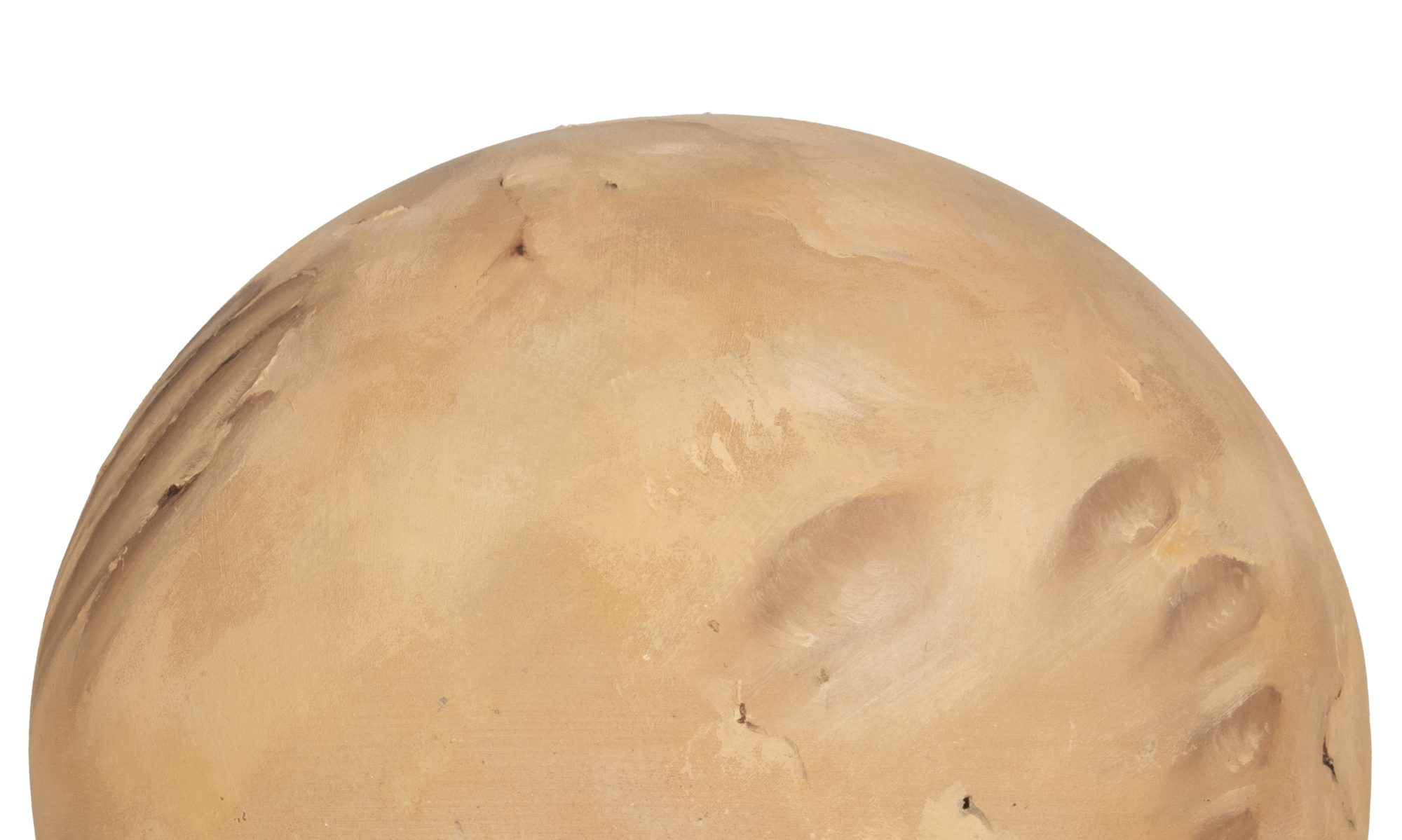
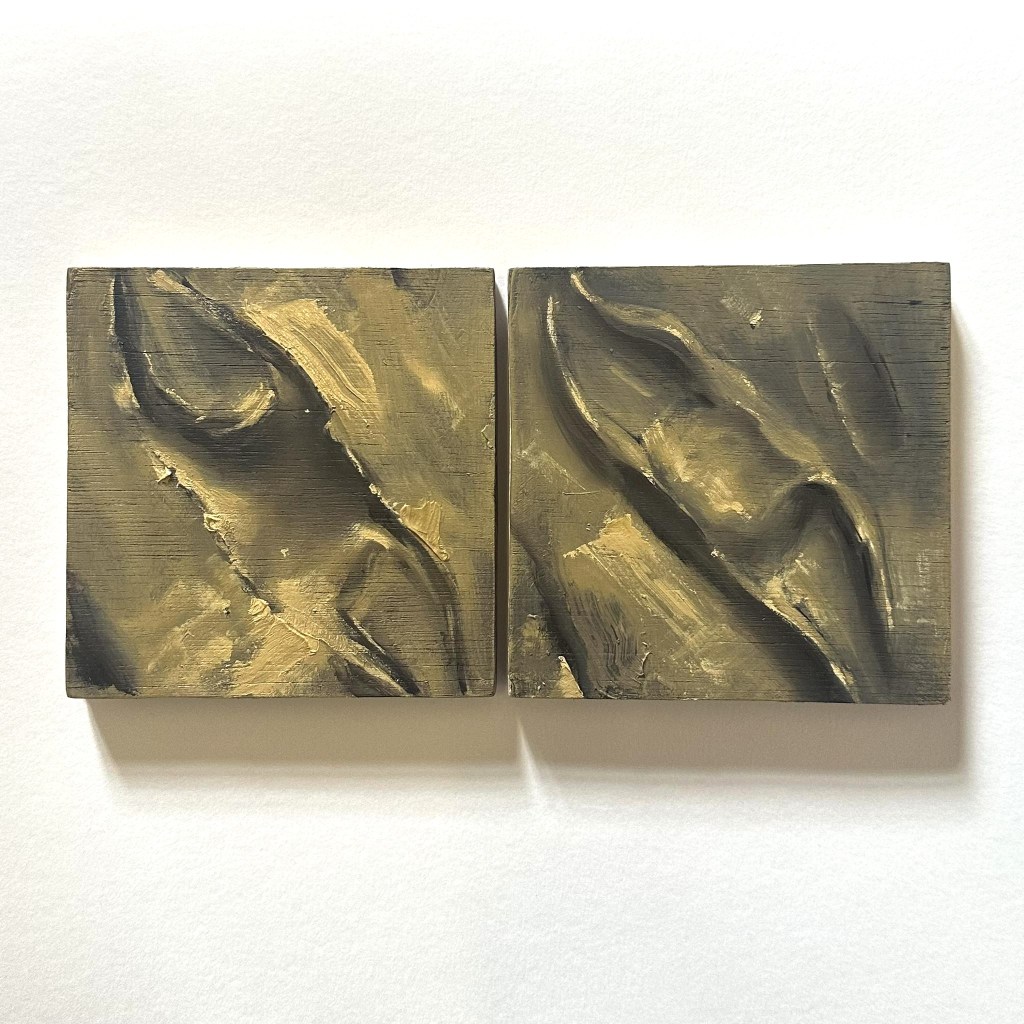
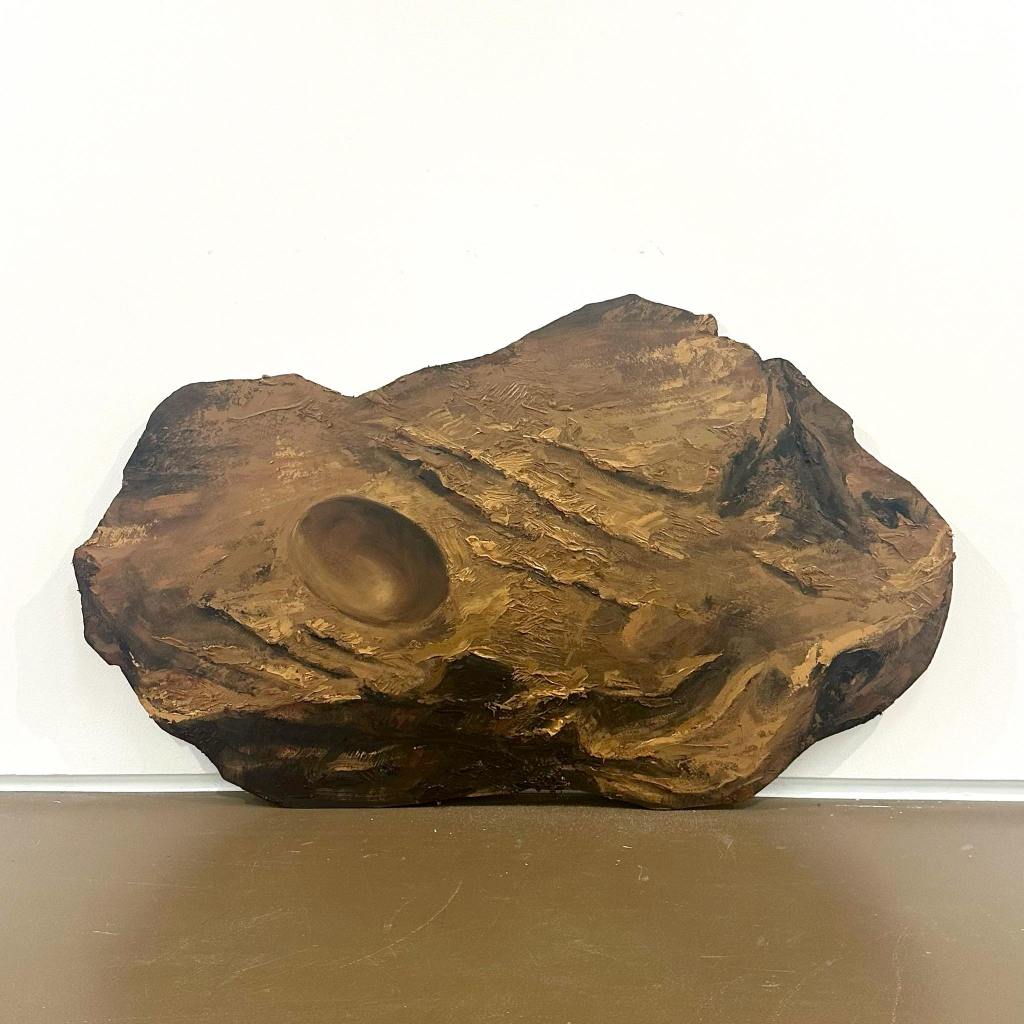
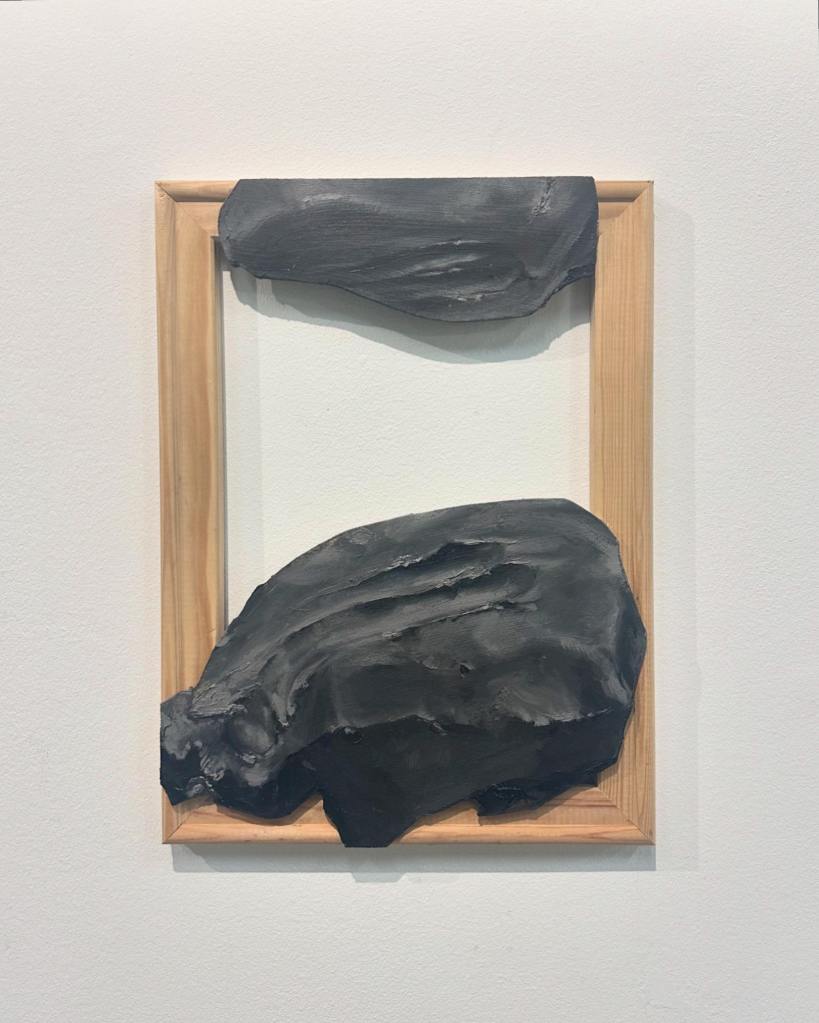
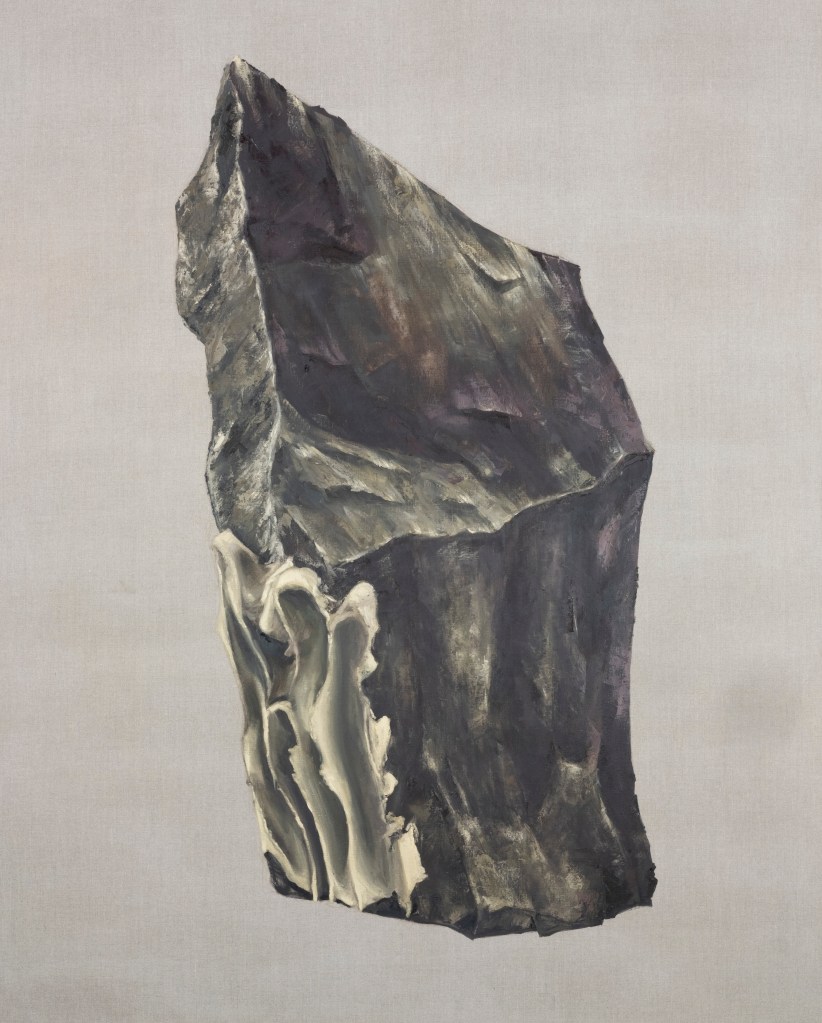
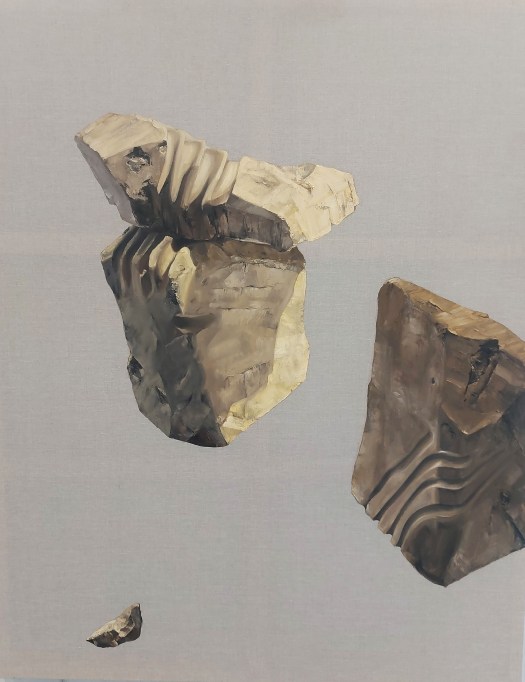
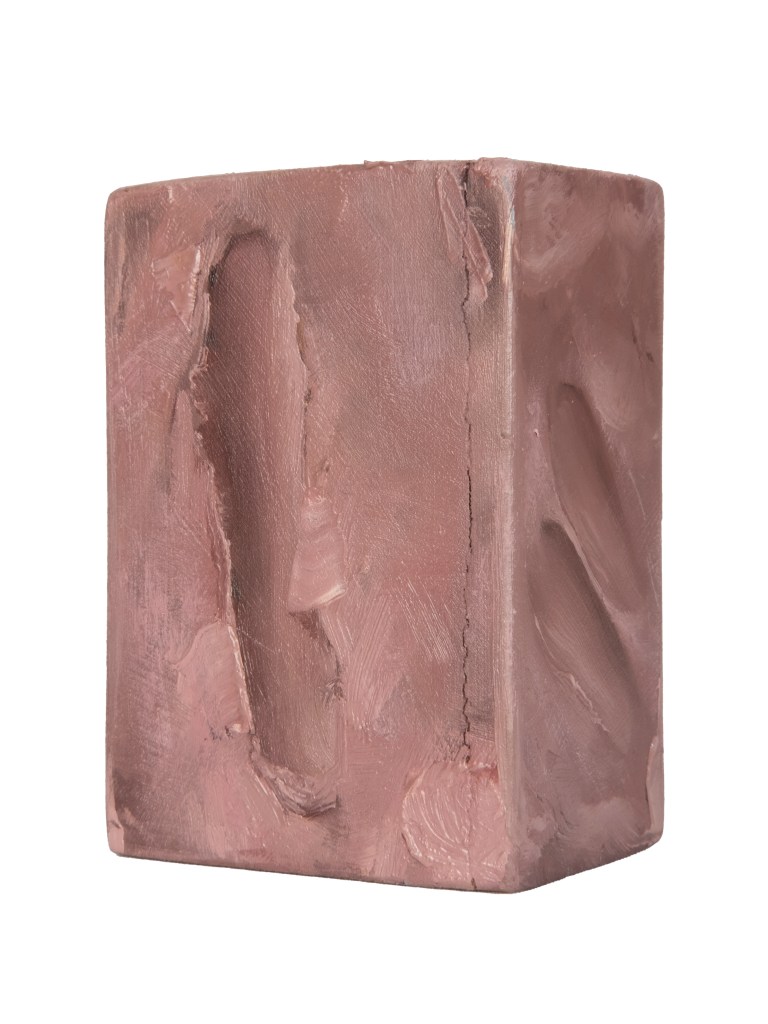
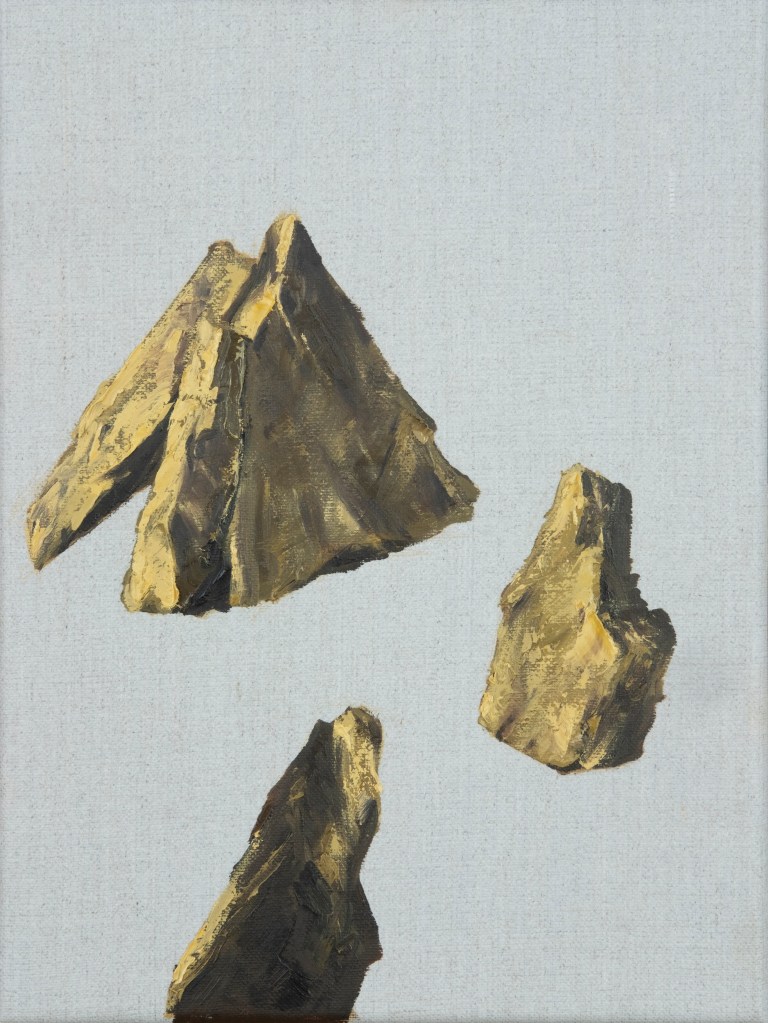
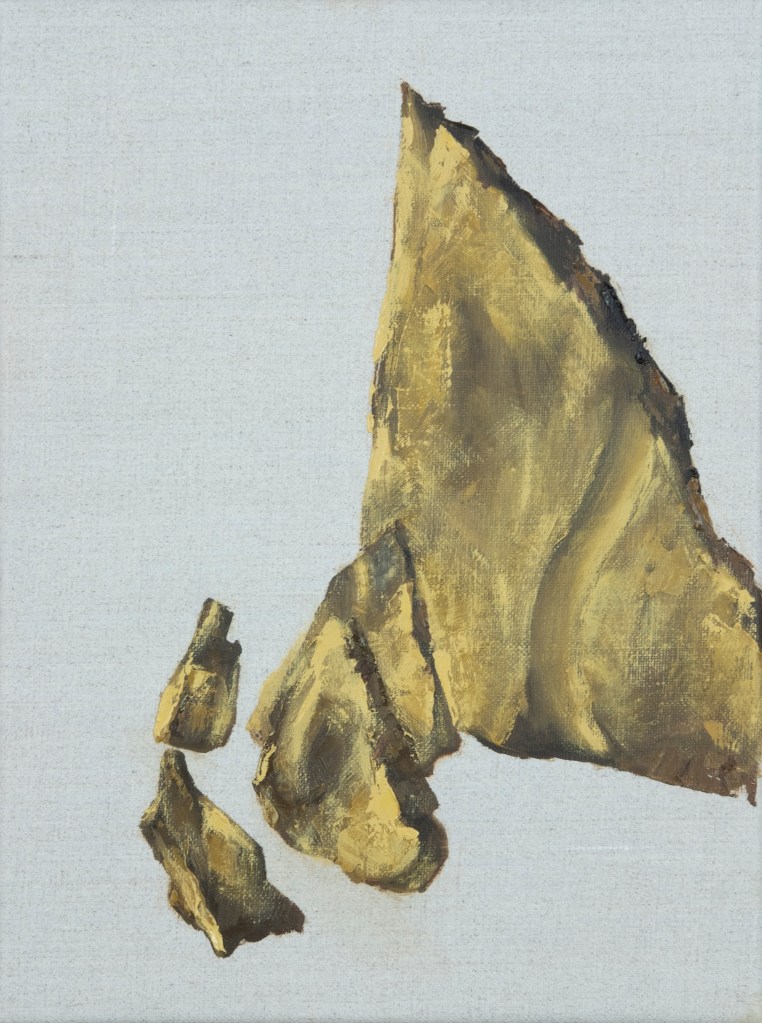
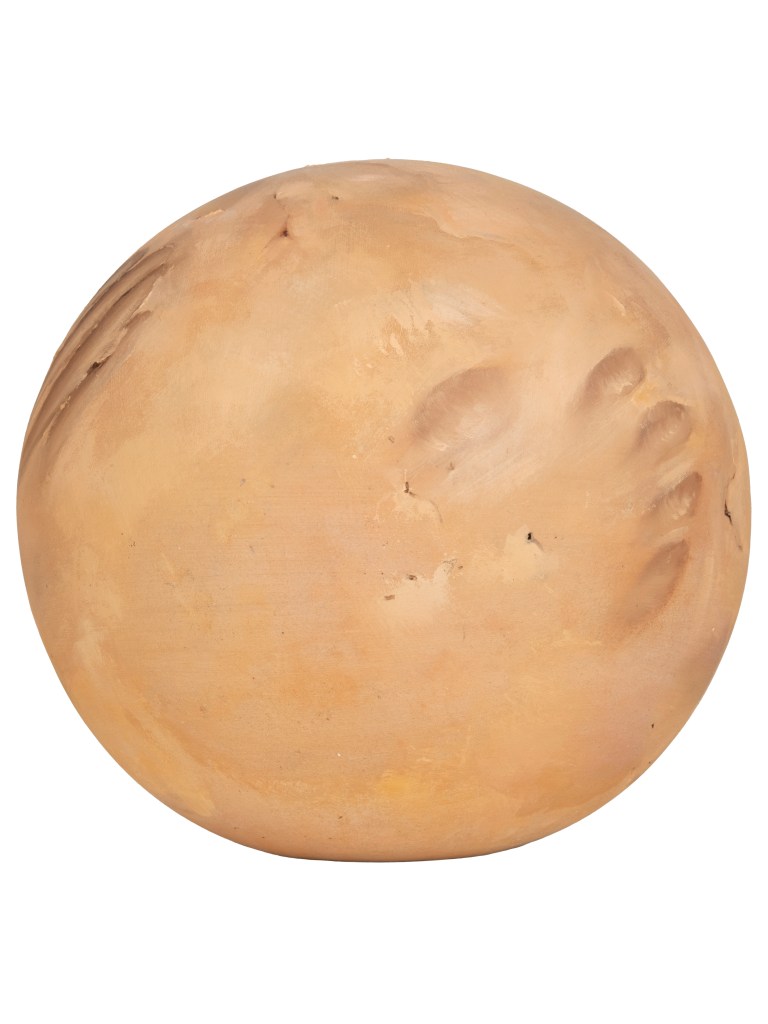
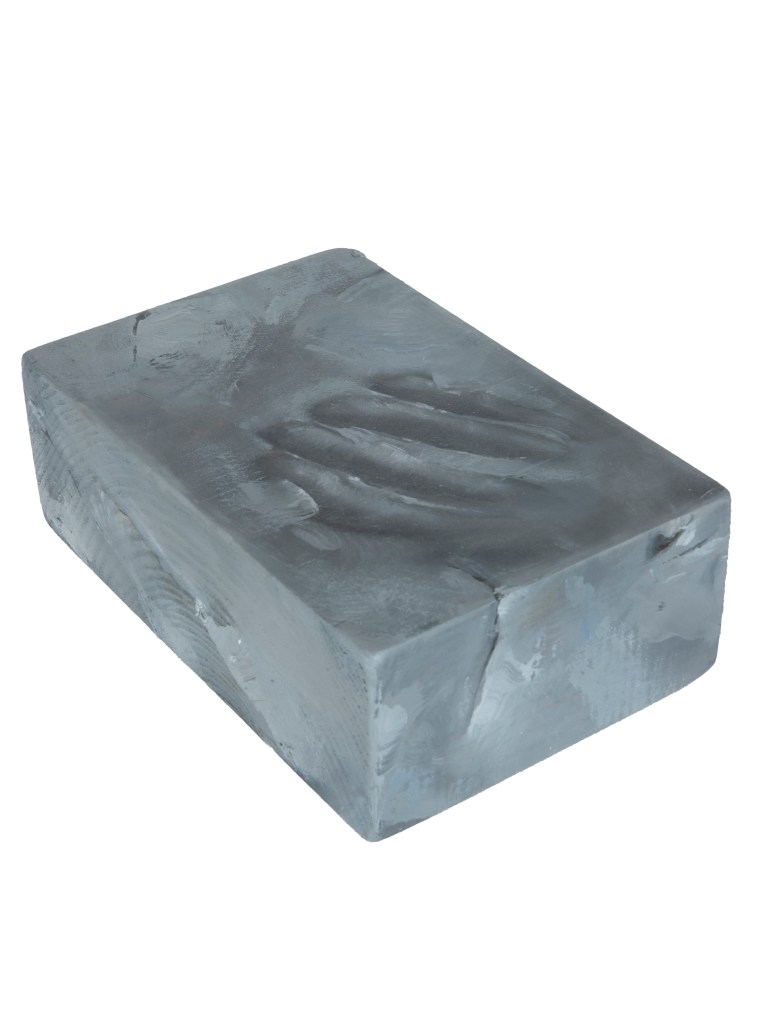
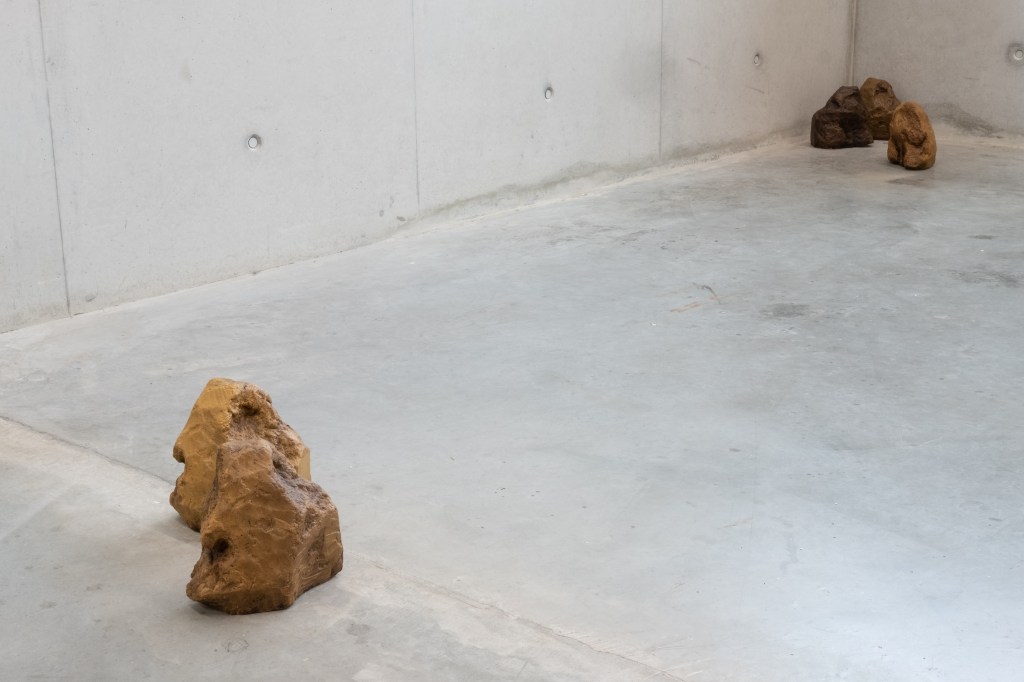
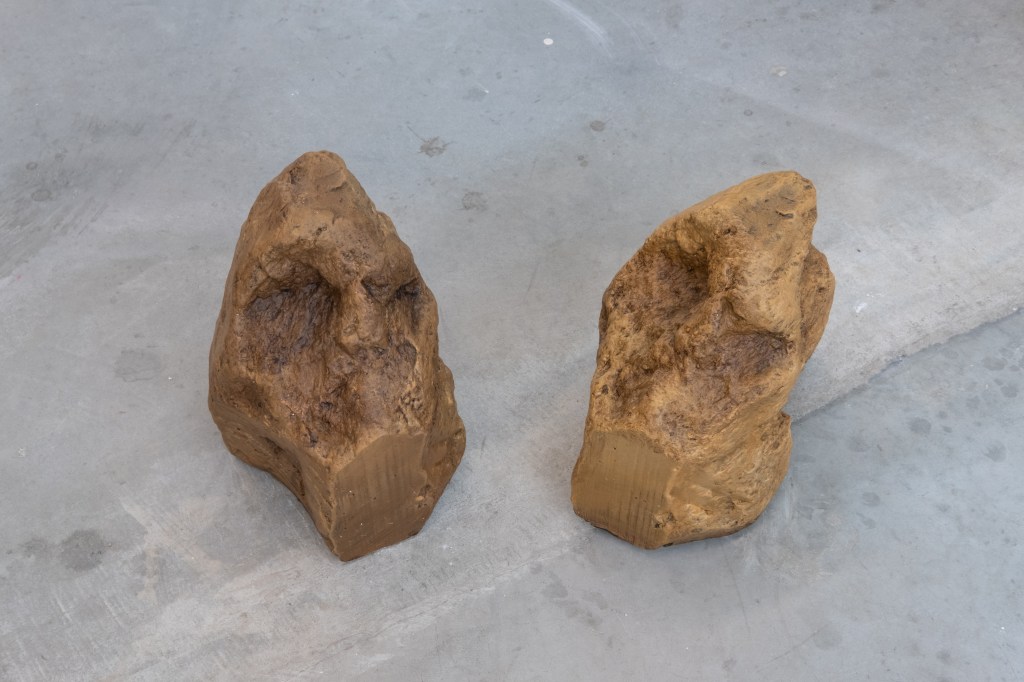
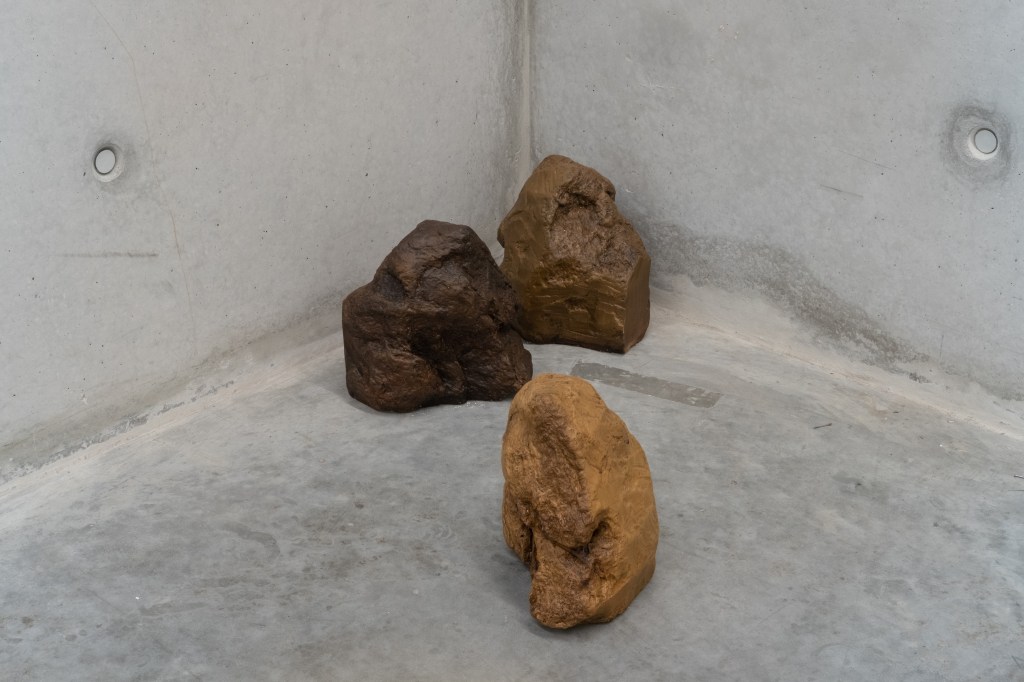
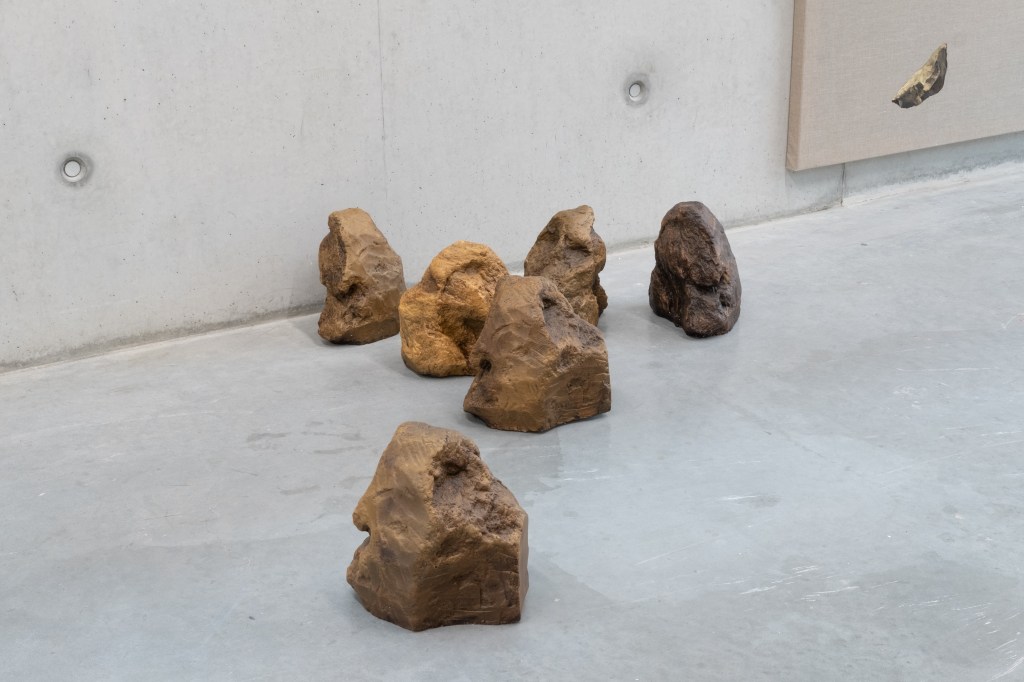
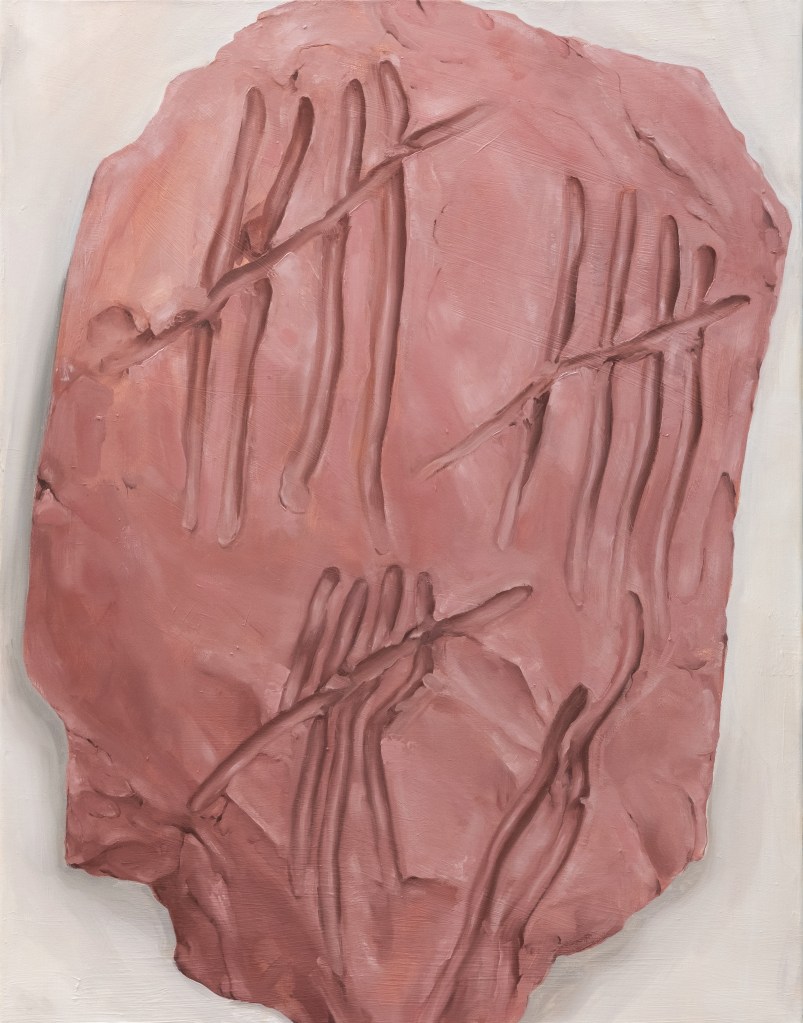
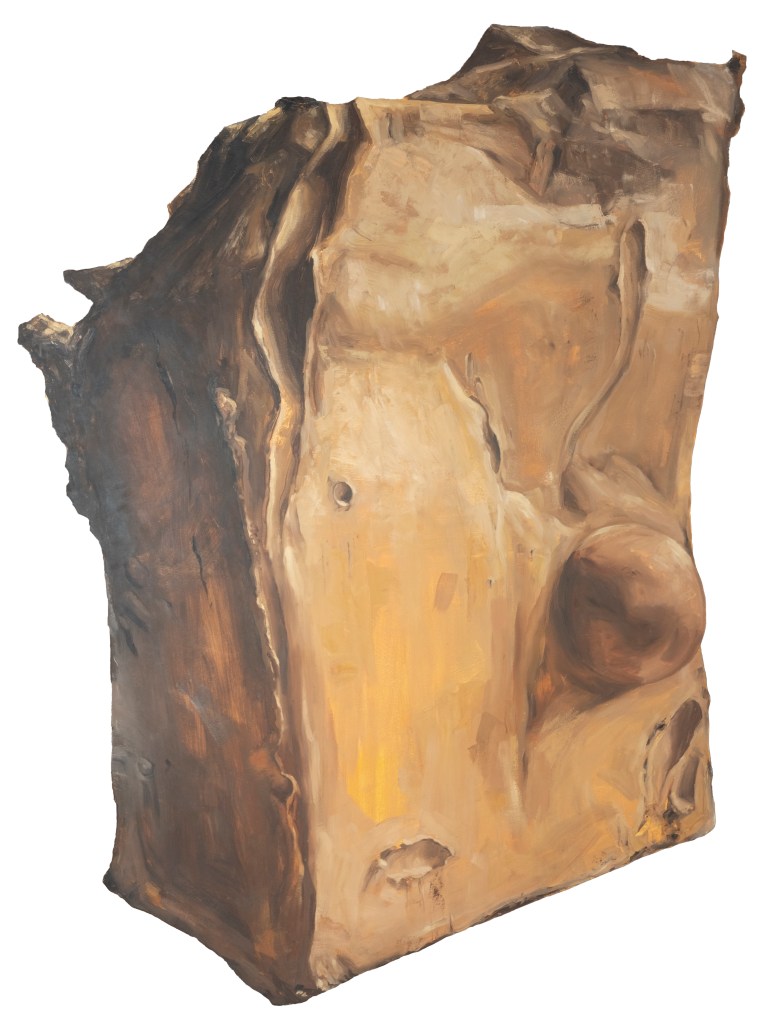
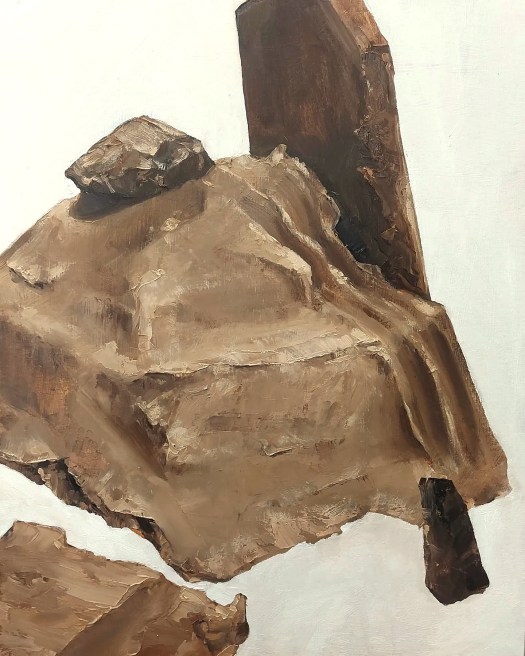
Justine Lambrechts’ (1998°) practice explores the integration of the sculptural form within the painted space. More specifically, by focusing on materiality as a starting point, she has been studying the rendition of clay and stone in relation to paint. The translation of these earth materials with their own tangible properties and medium-specific logic causes a loss of context and feeling of alienation of the subject when brought to a flat surface: friction is created between the depicted subject and its painted counterpart.
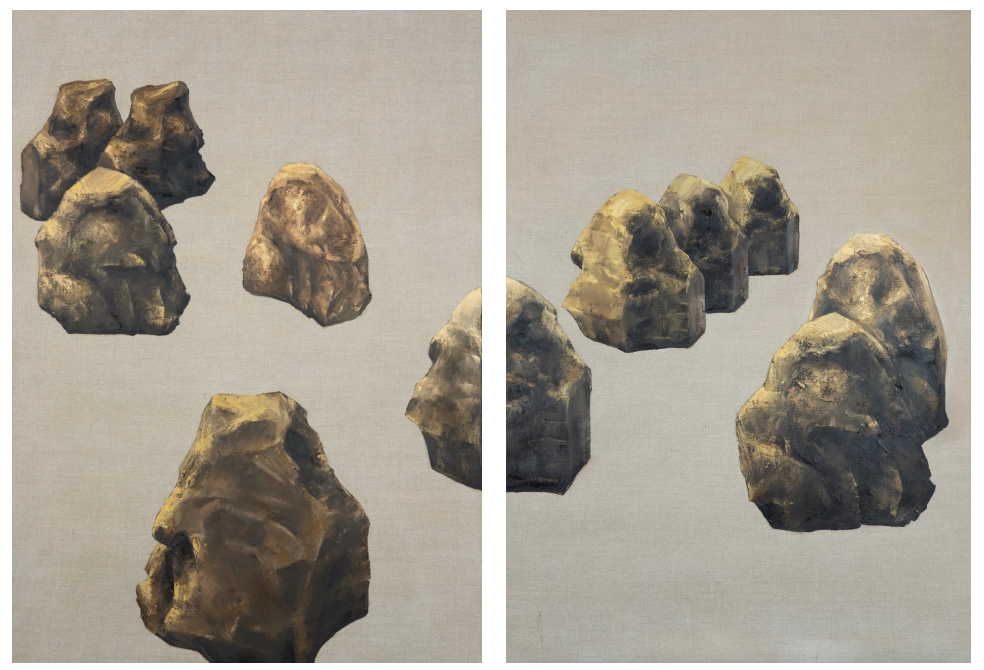
Starting from a deeply rooted fascination for the unknown origin of ‘found (un)natural objects’ that is grounded within the genre of science-fiction, her focus has later shifted from mere observations and studies to the very manipulation of these clay and stone materials. The estrangement that was already caused by the friction of media becomes amplified when exaggerating with both scale and context. Small still life clay and stone compositions are overly enlarged, shrunk and are stripped away from their environment, leaving only their materiality to interpret.
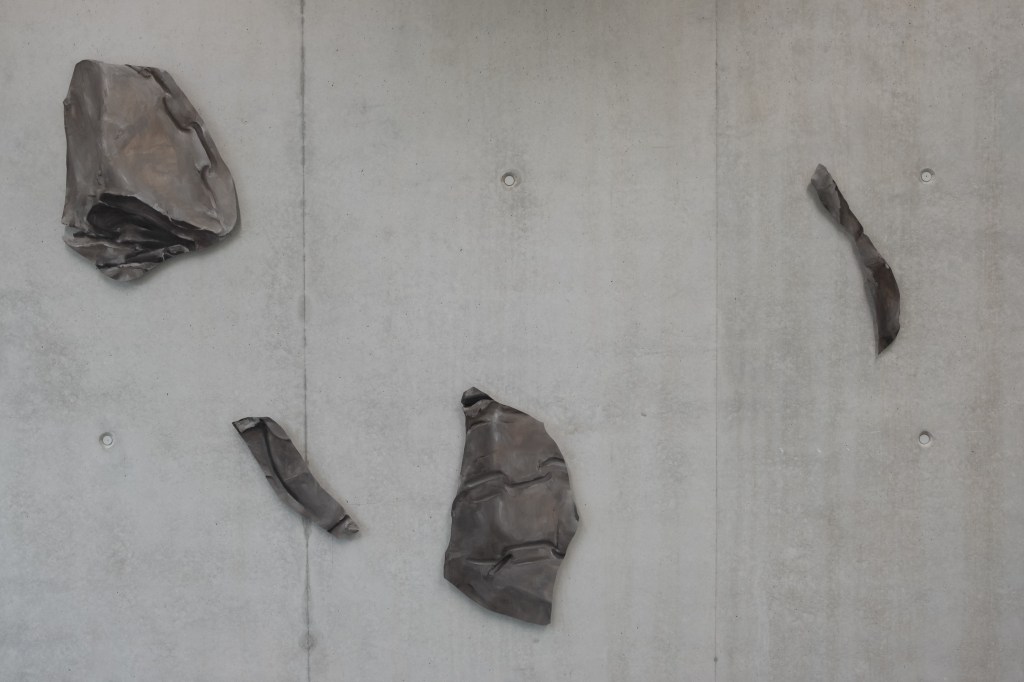
The physical boundaries associated with paintings are sought out and challenged by stepping away from the conventional rectangular shape of the canvas, letting the two-dimensional painted subject enter the three-dimensional space again. Moreover, she creates the very objects that before served as the reference out of materials ranging from plaster to wood structures, provoking the question: ‘Where does the painting end and where does the sculpture begin?’
These natural looking objects are on different levels infiltrated by the artificial, all challenging the associations one might make with the depicted structure. This leaves and facilitates room for questions such as: ‘What is its origin?’, ‘Was it found?’, ‘Why has it been manipulated?’, etc.
Justine Lambrechts works and lives in Leuven, Belgium. After her master’s degree in Communication sciences in 2020, she pursued a Master in the Autonomous Fine Arts at Sint-Lucas, which she completed in 2022.




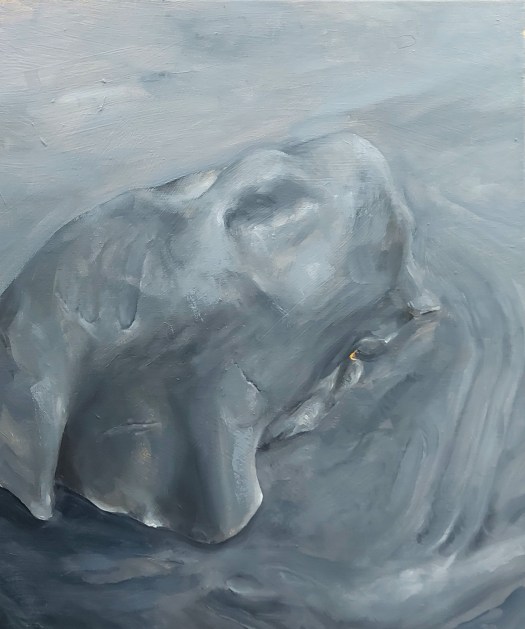
 Justine Lambrechts